The Dark Side of Green Energy
TL;DR — What This Is Really About
The Problem Is Not the Average Day. It's the Worst Day.
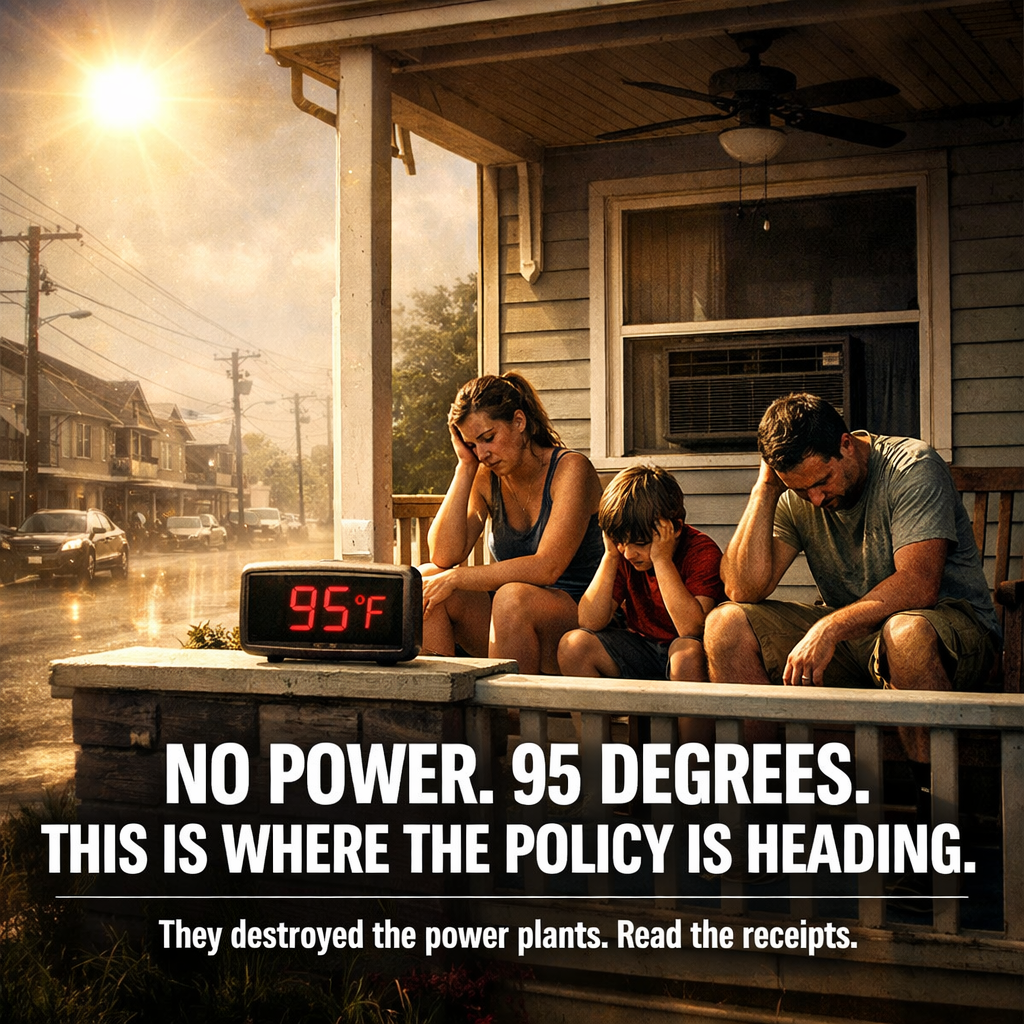
Electricity is not like water in a tank. You cannot store a month's worth of it and draw it down as needed. It has to be generated at the exact moment it is consumed — and the amount you need varies wildly from hour to hour and day to day.
On a mild spring morning in New Jersey, the demand for electricity is modest. People are at work, the temperature is comfortable, and most appliances are idle. But on a still, brutal afternoon in late July — 95 degrees, no breeze, the whole state reaching for the thermostat at the same time — demand can spike to two or three times that baseline, within a matter of hours.
That spike is not predictable with precision. One day the high is 80 degrees. The next day it hits 95. Nobody knows exactly which day will be the worst day of the year until it arrives. And on that day, every air conditioner, every refrigerator, every industrial cooler in the region is running at full capacity simultaneously.
This is the fundamental engineering challenge of an electric grid: you must be able to meet the demand of the worst day — not the average day. If you can only meet average demand, you will fail on the days that matter most.
For decades, New Jersey met this challenge with a simple solution: we owned enough local power plants to handle the worst day ourselves. Coal plants, oil plants, a nuclear station, gas peakers — they sat ready. On the mild days they ran at partial capacity or idled. On the brutal days they ran flat out. The lights stayed on.
Then we destroyed them.
What We Lost — And Why It Cannot Be Replaced by Wind and Sun
Between 2017 and 2022, New Jersey permanently shut down and demolished a series of major power plants. The Oyster Creek Nuclear Generating Station — the oldest nuclear plant in America, capable of powering 600,000 homes around the clock — went dark in 2018. The B.L. England plant at Beesley's Point in Cape May County, a 450-megawatt facility that had served South Jersey for over 50 years, closed in 2019 and its smokestack was imploded in 2023. Seven plants in total. 2.7 gigawatts of generating capacity. Gone permanently.
The official answer to the question "what replaces them?" was: solar panels, wind turbines, and offshore wind farms.
Here is the problem — and it comes down to one word: dispatchable. A dispatchable power plant is one that can be turned on, turned up, or turned down on command, at any hour, in any weather. You call it, it responds. Coal, gas, oil, and nuclear are all dispatchable. The grid operator can pick up the phone — metaphorically speaking — and say "we need full power right now" and the plant delivers. Solar and wind are not dispatchable. Nobody commands the sun. Nobody commands the wind. They produce when nature allows and go quiet when it doesn't. That is not a criticism — it is simply physics.
And here is where physics becomes a crisis. The worst day on the grid — that 95-degree July afternoon when every air conditioner in the state is running at once — is typically a day of high pressure, low wind, and hazy skies. The sun is strong but fading by mid-afternoon. The air is dead calm. Demand is at its absolute peak. And the non-dispatchable sources that were supposed to replace the demolished plants are doing the least they will do all week. You cannot call a wind farm and say "we need you at full power right now — it's 95 degrees and the grid is failing." You can say that to a gas plant. You could have said it to Oyster Creek. You cannot say it to a field of solar panels on a still July afternoon. And you certainly cannot say it to a smokestack that has been imploded into rubble.
But once again, offshore wind is not dispatchable. We cannot just look at the total megawatts on paper and declare the problem solved. A wind farm that produces 2,400 megawatts delivers when the wind blows — not when it's needed; on a still July afternoon it produces close to zero, the exact moment the grid needs it most. Megawatts on a blueprint do not keep the lights on. Only megawatts that show up on command do that. And offshore wind, like all wind, shows up when it wants to — not when we need it to.
Enter PJM — The Energy Insurance Company
When New Jersey realized it could no longer guarantee its own power on the worst days, it became dependent on an organization called PJM Interconnection. PJM manages the electric grid for 13 states and Washington D.C. — 67 million people from Chicago to the Carolinas. Think of PJM as an energy insurance company.
Here is how insurance works: you pay a premium every month so that when something goes wrong — a car accident, a house fire — someone is there to cover the loss. You hope you never need to make a claim. But the premium is the price of the guarantee.
PJM works the same way, but instead of paying claims in dollars, it pays in electricity. Every year PJM runs an auction. Power suppliers across 13 states bid to guarantee they will have electricity available on the worst days. Utilities — including New Jersey's PSE&G, JCP&L, and Atlantic City Electric — buy that guarantee on behalf of their customers. The cost gets passed to every electric bill in the region, buried in the rate with no line item and no explanation.
When New Jersey had its own plants, it needed less of this insurance. When New Jersey demolished its plants, it needed more — much more. And here is the iron law of insurance: when the risk goes up, the premium goes up.
In the most recent auction before the plant closures fully registered in the market, PJM's capacity auction cost a total of $2.2 billion across all 13 states. After the closures — after the market absorbed the reality of what had been lost — the next auction cost $14.7 billion. The same auction. One year later. A 567% increase in total cost. For an average customer, the hidden capacity charge on their monthly bill went from about $3 per month to $15 per month in a single year. No explanation on the bill. No press conference. No admission of cause.
Now Shift Your Focus From New Jersey to PJM
New Jersey alone destroyed 2.7 gigawatts of dispatchable energy. Now, across PJM's 13 states, another 40 gigawatts are scheduled to retire by 2030.
New Jersey used to produce more electricity than it consumed — it was a net exporter as recently as 2017. That is no longer true. Today New Jersey imports a growing share of its electricity from out of state, and that dependency grows every year as more plants are retired. At this point it no longer makes sense to think of New Jersey as having its own independent power grid — it doesn't. What replaced it is a dependency on 67 million people's shared infrastructure stretching from Chicago to the Carolinas. So when we ask what is planned next for New Jersey's power supply, the honest answer is: there is no "New Jersey power supply" anymore. There is only PJM. And the same policy that demolished New Jersey's plants is now playing out across all 13 states simultaneously.
PJM's own grid operator has officially projected a supply shortfall beginning June 2027 — the first in its history. In the most recent capacity auction, even at the maximum allowed price, PJM came up 6,625 megawatts short of what it needed. The scorekeeper is saying the game is being lost.
Where Green Energy Goes, Blackouts Follow
To be precise: it is not the solar panels and wind turbines that cause blackouts. The panels and turbines are not the villain. The villain is the policy decision to destroy reliable, dispatchable power plants before adequate replacements exist — and to pretend that wind and solar are a like-for-like substitute when they are not.
They are not a substitute on the worst day. They are not a substitute at 4pm on a 95-degree afternoon when the wind is not blowing. They are not a substitute when demand spikes unpredictably and the grid needs a plant that will simply turn on when told to.
This pattern — reliable plants demolished, green energy falling short at peak hours, prices spiking, blackouts eventually following — has already played out in Germany, California, Texas, and South Australia. It is not a theory. It is a documented sequence of events that occurs when the demolition of dispatchable power outpaces the maturity of the technology replacing it.
New Jersey is now on that same curve. The receipts follow below.
The remainder of this document contains the full sourced timeline, plant-by-plant closures, price auction data, PJM filings, and national context. Every claim above is documented in the tables that follow.
The Dark Side of Green Energy: New Jersey's Power Plants — and What Followed
Part 1: The New Jersey Power Plants That Were Closed and Destroyed
New Jersey has lost at least 2,708 megawatts (MW) of in-state electricity generation capacity since 2017 through the closure of seven major power plants. Every single one of these plants has been demolished, sold for redevelopment, or permanently decommissioned — none can be restarted.
| Plant | Type | Year Closed | Capacity Lost | Full Source URL |
|---|---|---|---|---|
| Hudson Generating Station | Coal | June 2017 | ~600 MW | |
| Mercer Generating Station | Coal | June 2017 | ~400 MW | |
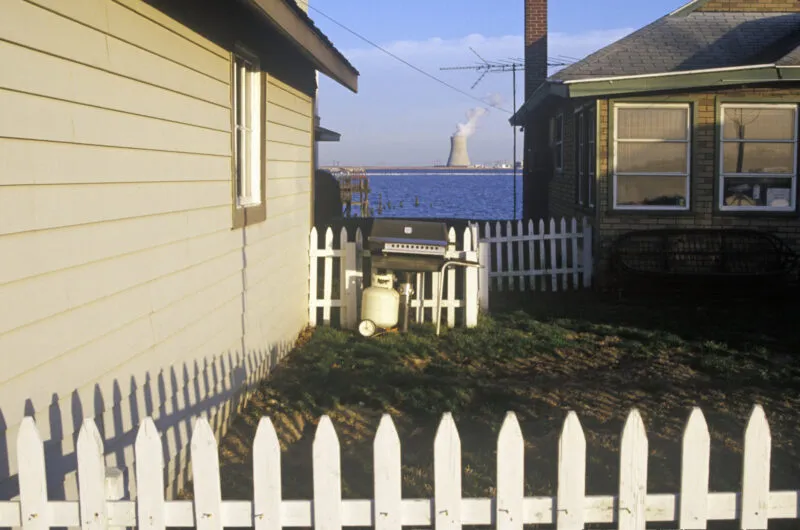
| Oyster Creek Nuclear | Nuclear | Sept. 17, 2018 | 636 MW | |
| Deepwater Generating Station | Natural Gas | 2018 | 156 MW | |
| B.L. England / Beesley's Point | Coal/Oil | May 1, 2019 | 450 MW | |
| Logan Generating Plant | Coal | ~May 31, 2022 | 225 MW |

|
| Chambers Cogeneration Plant | Coal | ~May 31, 2022 | 245 MW |
|
| Essex Generating Station | Natural Gas | 2022 | 81 MW | |
| Newark Bay Cogen | Natural Gas | 2022 | 136 MW |



[1][2]
Beesley's Point (B.L. England) — Your Local Plant
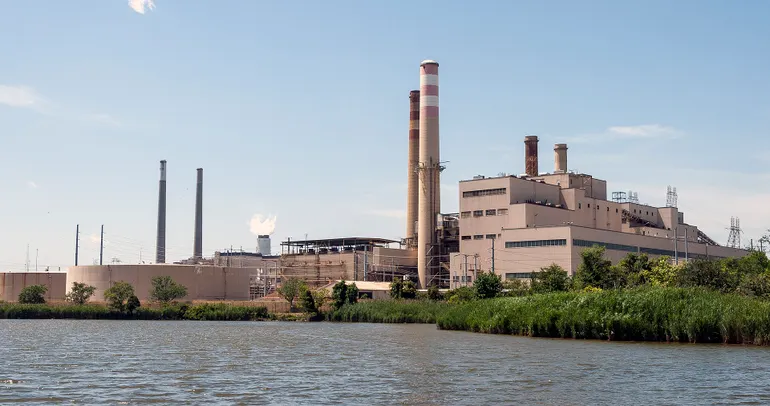
- The B.L. England Generating Station in Beesley's Point, Cape May County, shut down May 1, 2019 after more than 50 years of service, providing approximately 450 megawatts of capacity. [3]
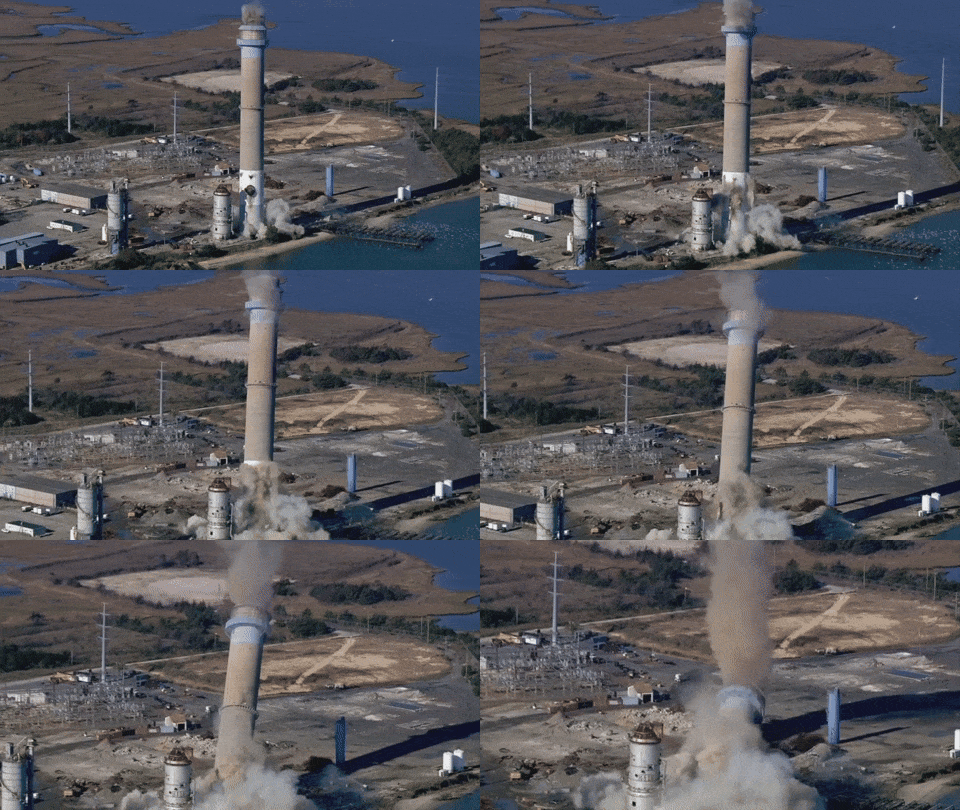
- A plan to convert it to natural gas (which would have kept it operating) was abandoned due to environmental opposition to a pipeline through the Pinelands. The main building was imploded April 2023. [4]
- The 463-foot smokestack was imploded October 26, 2023, completing the demolition. The site is now being redeveloped as a connection point for offshore wind farms. [3-1]
Oyster Creek Nuclear — The State's Largest Baseload Plant
- The Oyster Creek Nuclear Generating Station — the first nuclear power plant ever commissioned in the United States (began operations 1969) — permanently ceased operation September 17, 2018. [1-1]
- It produced 636 MW of clean, reliable, around-the-clock power — enough for 600,000 homes, equivalent to all of Monmouth and Ocean counties combined. It cannot be restarted. [5]
The Last Coal Plants — Gone 2022
- New Jersey's last two coal-fired power plants (Logan and Chambers) shut down in ~May 2022. [6]
- The Logan plant in Gloucester County was imploded December 2022 in front of a crowd of environmental advocates, state politicians, and utility officials. [7]
Part 2: New Jersey Now Buys Its Power From Far Away
| Fact | Detail | Full Source URL |
|---|---|---|
| NJ was once a net electricity exporter | Now a net importer, dependency growing every year |
|
| 2023: NJ imported ~1/5 of its power from out-of-state | "nearly one-fifth of its power from generators in other states" |
|
| PJM itself confirmed NJ's in-state shortfall | “What used to cost $18, in what’s supposed to be a competitive auction bid, suddenly costs $270,” said Sen. John Burzichelli (D-Gloucester). | |
| PJM joins the narrative — blames offshore wind failure, not the permanent shutdown of NJ's power plants | "A seven-year-long effort by New Jersey to fill this gap with offshore wind has failed to deliver any results whatsoever, and consumers are now paying the price" — notably absent from this statement: any mention of the 7 demolished power plants that created "the gap" in the first place |

[8][9]
Part 3: The Price Increases
Every year, New Jersey holds an auction called the Basic Generation Service (BGS) auction — the process that sets the electricity supply rate for most residential customers in the state. If you pay a PSE&G, JCP&L, Atlantic City Electric, or Rockland Electric bill and never switched to a third-party supplier, your rate is set by this auction.
You had no vote. You had no choice. Some customers have been approached at their door by third-party suppliers promising a better deal — but long story short, every supplier buys from the same wholesale market, and the electrons in your wires are physically identical regardless of who invoices you. There is no escape hatch. What the table below shows is that BGS auction prices have increased sharply every year since the plant closures — driven by the same PJM capacity market explosion described above — all of it buried in your monthly bill with no explanation of the real cause.
| Event | Detail | Full Source URL |
|---|---|---|
| 2024 BGS Auction results | "Winning prices for all four EDCs increased compared to last year's auction mainly due to higher energy costs" | |
| 2025 BGS Auction results | Bills projected to increase 17.23%–20.20% depending on service territory | |
| 2025 BGS mass market auction | Prices spiked ~40% versus tranches being replaced in the laddered portfolio | |
| June 2025 rate increase in effect | "Electric rates increased across New Jersey on June 1" — PSE&G, JCP&L, ACE, RECO all affected | |
| PJM, Facing Capacity Shortage as Early as 2026/2027 Delivery Year, Agrees to Lower Auction Price Cap | The grid operator underscored that it has repeatedly warned of growing risks to power system reliability. “We have been warning for over two years of the prospect that parts of our country could run short of power during high demand periods,” it [the grid manager] said. |




[10][11]
Part 4: More Warnings: Ignored
NERC — the North American Electric Reliability Corporation — is the official watchdog of the power grid for the entire continent. It is not a government agency. It is a nonprofit organization that was created by the electric utility industry itself in 1968, after a massive 1965 blackout plunged 30 million people across the Northeast into darkness in a single cascading failure.
The industry realized it needed a neutral referee to set reliability standards and sound the alarm when the grid was heading toward trouble. Today, NERC oversees the bulk power system across the entire continental United States, most of Canada, and part of Mexico. It writes and enforces mandatory reliability rules, monitors the grid in real time, and publishes an annual Long-Term Reliability Assessment — essentially a report card on whether there will be enough power to meet demand over the next ten years.
NERC is not a lobby, not a think tank, and not political. It is the neutral, federally-authorized scorekeeper. When NERC says the grid is in trouble, it is not an opinion. It is a warning from the referee.
| Event | Detail | Full Source URL |
|---|---|---|
| Despite NERC’s warnings, coal plant retirements continue. Policymakers must act to retain fuel-secure, dispatchable resources critical for meeting the nation’s energy needs. | "In this shifting energy landscape, coal’s dispatchable, fuel-secure generation remains a critical safeguard against energy shortfalls, extreme weather events, and grid instability that can lead to blackouts." | |
| In 2011, mercury rules. Then it was carbon. Tomorrow it will be something else. The stated reason always changes. The demolished plants stay demolished. | Rep. Darrell Issa (R-Calif.) asserted in a recent letter to the White House that the mercury rule could “unintentionally jeopardize the reliability of our electric grid.” |

Part 5: More Destruction Planned — ~40 GW at Risk Across PJM After the 2.7 GW Already Destroyed in New Jersey
We Say it Again
New Jersey used to produce more electricity than it consumed — it was a net exporter, sending surplus power to neighboring states as recently as 2017. That is no longer true. Today, New Jersey imports somewhere between 10–30% of its electricity from out of state, and that dependency grows every year as more plants are retired. At this point it no longer makes sense to think of New Jersey as having its own independent power grid — it doesn't. It has a share of PJM's grid.
The local grid that once powered South Jersey from Beesley's Point, powered the Shore from Oyster Creek, and powered Newark from its gas plants — that grid is gone. What replaced it is a dependency on 67 million people's shared infrastructure stretching from Chicago to the Carolinas. So when we ask what is planned next for New Jersey's power supply, the honest answer is: there is no "New Jersey power supply" anymore. There is only PJM. Further destruction is planned for PJM.
| Fact | Detail | Full Source URL |
|---|---|---|
| PJM's own warning: 40 GW at risk by 2030 | PJM's Four Rs Report cautioned that 40 GW of thermal generation — 21% of PJM's entire installed capacity — is at risk of retirement by 2030. NJ's 2.7 GW was just the opening act. | https://www.energy.gov/sites/default/files/2025-08/202c%20Order%20No.%20202-25-8.pdf/ |
| Trump Administration Fact Sheet confirms the number | "Approximately 40 GW, or 21% of PJM's installed firm power capacity is at risk of being retired by 2030. After forcing the shutdown of reliable power plants across the rust belt, the region has experienced some of the highest electricity price hikes and grid reliability issues in the nation." | https://www.energy.gov/articles/fact-sheet-trump-administration-outlines-plan-build-big-power-plants-again |
| Utility Dive: up to 58 GW faces retirement in PJM by 2030 | Market monitor warns up to 58 GW could retire by 2030 without replacement — including 19.6 GW for regulatory reasons and 33.8 GW that may become uneconomic | https://www.utilitydive.com/news/pjm-coal-gas-power-plant-risk-retirement-market-monitor/710518/ |
Some will say the villain in this story is the collapse of the Ørsted offshore wind project — that if Ocean Wind 1 and 2 had been built, none of this would have happened. That is not just wrong. It is precisely backwards. Even if every turbine had been installed on schedule, offshore wind operates at roughly 35–45% of its nameplate capacity on an average day — and close to zero on the still, brutal afternoon when the grid is screaming for power. At best, Ørsted would have replaced one third of what was already demolished, delivered nothing on the worst days, and changed none of the capacity market math.
But here is the part nobody says out loud: that partial, flickering coverage would have given politicians exactly the cover they needed to demolish the remaining dispatchable plants still operating today — because the turbines on the horizon would have looked like progress. By the time the wind died on that 95-degree afternoon and the lights went out, there would have been nothing left to turn back on. The last gas plant would already be rubble. The Ørsted project did not fail New Jersey. It failed to complete the job of hiding what was already being done to New Jersey.
The demolitions were the crime. The wind farms were the alibi. And now — YOU understand the difference between a dispatchable megawatt and a promise written on the wind. The plants that remain are still standing. The capacity market is screaming the price of what was lost. The warnings are no longer coming from critics — they are coming from PJM itself, from NERC, from the U.S. Department of Energy. Maybe it is not too late. Because now we know.
Part 6: Summary Timeline
| Year | Event |
|---|---|
| 2017 | Hudson + Mercer coal plants closed (~1,000+ MW gone) |
| 2018 | Oyster Creek Nuclear closed (636 MW gone) |
| 2018 | Deepwater gas plant closed (156 MW) |
| May 1, 2019 | B.L. England / Beesley's Point closed (450 MW gone) |
| May 2022 | Logan + Chambers coal plants closed; Essex + Newark Bay gas plants closed |
| Dec. 2022 | Logan plant imploded — NJ has zero coal generation |
| Apr./Oct. 2023 | B.L. England boiler imploded April; smokestack imploded October |
| 2023 | NJ importing ~1/5 of its electricity from out-of-state |
| Feb. 2024 | NJ BGS auction: higher prices for all four utilities vs. prior year |
| July 30, 2024 | PJM capacity auction: $269.92/MW-day — a ~833% spike from $28.92 the prior year |
| Oct. 2024 | FERC Commissioner Christie: plants "retiring far too quickly for reliability" |
| Dec. 2024 | NERC 2024 LTRA: 122,000 MW retiring; reliability risks across half of U.S. |
| Feb. 2025 | NJ BGS 2025 auction: bills projected up 17.23%–20.20% starting June 1, 2025 |
| Apr. 2025 | PJM confirms NJ has "insufficient generation in-state"; offshore wind effort "failed to deliver any results whatsoever" |
| June 1, 2025 | NJ electricity rate hike takes effect for all PSE&G, JCP&L, ACE, RECO customers |
| Dec. 17, 2025 | PJM capacity auction hits $333.44/MW-day price cap AND falls 6,625 MW short of reliability target — first time in history |
| Jan. 16, 2026 | PJM Board directs emergency corrective actions after auction shortfall |
| Jan. 28, 2026 | Spotlight PA confirms: PJM officially projects supply shortfall beginning June 2027 — first-ever reliability gap in PJM history |
References
- PSEG Power Retires Two Biggest Coal-Burning Plants in New Jersey — NJ Spotlight News (May 29, 2017)
- Oyster Creek, Nation's Oldest Nuclear Power Plant, Shuts Down Monday — WHYY (Sep 17, 2018)
- New Jersey Faces Power Supply Crunch After 2,700 MW in Plant Closures Over Eight Years — SpendingLessOnEnergy.com (Jul 24, 2025)
- Deepwater Generating Station — Global Energy Monitor (Plant Database Entry)
- Former Coal-Fired Power Plant in NJ Imploded to Make Way for Offshore Wind Electricity Connection — NBC Philadelphia (Oct 26, 2023)
- Starwood Shutters NJ's Last Two Coal Plants — Sierra Club NJ (Jun 13, 2022)
- New Jersey Energy Grid Developments During the Murphy Administration — Tri-State Infrastructure News (May 8, 2025)
- New Jersey State Energy Profile — U.S. Energy Information Administration (Dec 31, 2024)
- What's to Blame for NJ's Impending Electric Rate Increase? — NJ Spotlight News (Mar 11, 2025)
- Lawmakers Point Fingers as Energy Prices Set to Rise — NJ Spotlight News (Apr 24, 2025)
- Electricity Prices Set to Rise by Roughly $25 Per Month This Summer — New Jersey Monitor (Feb 12, 2025)
- Governor Wants Feds to Investigate Higher Electricity Prices — New Jersey Monitor (Apr 18, 2025)
- Why Are New Jersey's Electricity Bills Going Up and What Does PJM Have to Do With It? — NJ Policy Perspective
- New Jersey Asks FERC to Investigate PJM Capacity Auction Results — S&P Global (Apr 17, 2025)
- NJ Gov. Urges FERC to Investigate PJM; Christie and Phillips Defend PJM — RTO Insider
- Governor Murphy Signs Bills Increasing Accountability of Grid Operator PJM — NJ Governor's Office (Aug 15, 2025)
- PJM, Others Urge FERC to Dismiss Ratepayer Advocates' Capacity Auction Complaint — Utility Dive (May 6, 2025)
- New Jersey Board of Public Utilities Approves 2024 Electricity Auction Results — NJ.gov (Feb 9, 2024)
- NJBPU Announces Conclusion of New Jersey's Annual Electricity Supply Auction — NJ.gov (Feb 12, 2025)
- New Jersey Mass Market Default Service Auction Prices Spike ~40% Versus Replaced Supply — EnergyChoiceMatters.com (Feb 12, 2025)
- PJM Facing Capacity Shortage as Early as 2026/2027 Delivery Year — Power Magazine (Jan 29, 2025)
- NERC Issues an Urgent Warning on Grid Reliability — America's Power (Dec 20, 2024)
- Dozens of Power Plants Closing Due to New EPA Rules — The New American (Dec 20, 2011)
- U.S. Power Companies Beg Customers to Turn Down Thermostats Amid Cold and Wind — The New American (Dec 2022)
- Fact Sheet: Trump Administration Outlines Plan to Build Big Power Plants Again — U.S. Department of Energy
- Up to 58 GW Faces Retirement in PJM by 2030 — Utility Dive
- PJM Capacity Auction Hits Record High, Falls 6,625 MW Short of Reliability Target — Utility Dive (Dec 2025)
- What's Happening with Electricity Rates in New Jersey? — Regional Plan Association
- To Avert a Reliability Crisis, the U.S. Must Prioritize Dispatchable Generation — Ampere.dev
- The Looming Blackouts Nobody Is Talking About — Klean Industries (Jul 2026)
Get a Free Chapter
A taste of Suicidal Apologetics and a heads-up when new posts drop. No fluff, no spam.
We will only notify you, and only once, when there is a new blog post. That's it.
Send It to Me